

Resin and Imprinted Concrete Driveway Maintenance Guide
To care for your resin driveway, sweep it regularly to clear leaves and grit, rinse it with water, use a mild detergent and a stiff brush for stubborn dirt, and only jet wash carefully at low pressure when needed. The same low-maintenance mindset applies to imprinted concrete too, but each surface needs a slightly different approach. If you own a resin bound or imprinted concrete driveway in Essex or elsewhere in the UK, this guide shows you what to do week to week, how to handle moss, weeds and stains, what changes with the seasons, when sealing matters for imprinted concrete, which cleaning mistakes to avoid, and when a repair or professional visit makes more sense.
Here's the thing about British weather: it doesn't care how much your new driveway cost. Wind, rain, frost, and the occasional rogue wheelie bin will test any surface over time. The good news is that both resin bound and imprinted concrete driveways are genuinely durable. We've been installing them across Colchester and the wider Essex area for over 20 years, and when they're looked after properly, they hold up very well. A little routine care protects the finish, helps prevent staining, algae and surface damage, and is far cheaper than letting small problems become big ones.
The quick difference: resin bound vs imprinted concrete (and why it matters for maintenance)
These two surfaces behave quite differently, which means your maintenance approach shouldn't be identical.
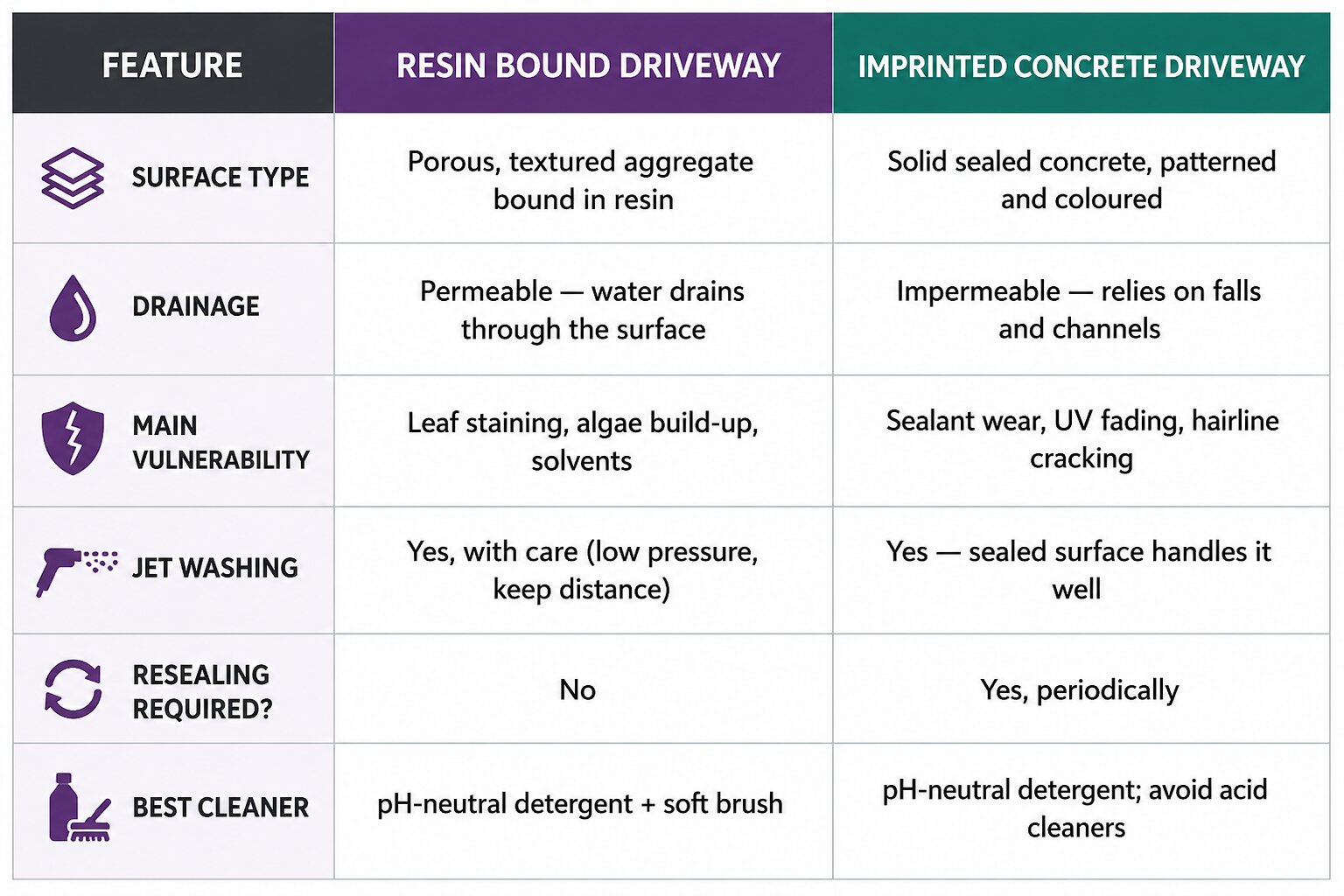
The short version: resin bound surfaces rely on keeping debris out of the aggregate; imprinted concrete relies on keeping the sealant intact. Both reward a bit of routine attention.
Driveway maintenance UK basics (works for both surfaces)
A 10-minute weekly habit
Your driveway doesn't need much — honestly, a quick sweep and rinse will handle 80% of maintenance. Keep it simple:
Sweep debris regularly. Dead leaves are the main culprit. Left for more than a few days (especially in damp conditions), they decompose and leave black staining that's a pain to shift. A stiff brush takes two minutes.
Rinse with a hose when needed. This washes away surface dust, pollen, and grit before it settles in.
Keep edges and drain channels clear. Blocked drains and overgrown borders are the number one source of weeds along driveway edges.
The golden rules: do this, avoid that
Do: For regular light maintenance, use a pH-neutral cleaner, a soft-bristled or stiff brush (not wire), and cold or lukewarm water, taking a gentle approach so the aggregate stones are not disturbed.
Avoid: Harsh acids, bleach used routinely, metal snow shovels (they scratch both surfaces), and close-range pressure washing; avoid harsh chemicals because they can damage the resin. Algae equals a skating rink in winter — deal with it before the first frost.
How to care for your resin driveway (resin driveway upkeep done properly)

Knowing how to care for your resin driveway properly comes down to understanding what the surface actually is: individual aggregate stones locked together in resin. A resin bound surface is designed for pedestrian and light vehicle traffic. Heavy goods vehicles should not park on the resin surface, and heavy vehicles can damage it through excess load. That means you want to keep the surface clean without forcing debris deeper into the texture or using chemicals that can soften the binder.
Cleaning resin bound stone safely
Start by sweeping loose debris to remove dirt, then rinse the surface with a garden hose. For more stubborn grime, use warm water and a mild detergent, then gently scrub with a stiff brush. Rinse thoroughly afterwards after using any cleaning product — leftover soap residue can leave the surface looking dull. Clean spills promptly to prevent staining.
Pressure washing a resin driveway: can you?
Yes, but carefully. Keep the pressure below 150 bar, hold the lance at least 200mm from the surface, use a wide fan nozzle, and keep it moving — don't linger over any one spot. The goal is to clean the surface, not blast the aggregate loose or force grit into the pores.
Dealing with weeds, moss, and algae on resin
Weeds on a well-installed resin driveway almost always come from the edges — overhanging borders, nearby soil, gaps at the margins — rather than growing through the surface itself. Keep edges tidy and you'll largely keep weeds at bay. To tackle weeds, remember that occasional growth usually comes from wind-blown seeds and can often be pulled out by hand as part of routine weed control. If it keeps returning, use a mild weed killer or weed killer herbicide suitable for resin surfaces.
For moss and algae, apply a proprietary moss or algae killer to affected areas, and follow the manufacturer's instructions. Moss can be removed using proprietary moss killers, while a hard broom or gentle pressure wash will clear the residue. Alternatively, a solution of baking powder and water can help for lighter patches. Occasional jet washing alongside biocide treatment will also help prevent moss growth and stop it returning.
If you're getting repeated algae build-up, check whether shaded areas are getting enough airflow. Algae loves damp, dark corners.
Common resin driveway stains (including chewing gum)
Oil and grease: Clean oil spillages immediately; start with warm water, absorb as much as possible with cat litter or dry sand, then treat stubborn stains with a resin-safe degreaser. Don't rub — dab and blot to avoid unsightly marks.
Tyre marks: Tyre treads can leave marks that need prompt attention. A gentle specialist cleaner and some patience usually does the job, though some guidance suggests white spirit followed by a pressure washer if that approach is confirmed resin-safe for your surface.
Chewing gum: For chewing gum, use freeze spray to harden it first, then lift it carefully with a suitable scraper.
Mineral stains: A mild household detergent may help first, but for mineral staining a careful treatment with oxalic acid and cold water is often the better option.
Cement marks: For cement residue, a diluted hydrochloric acid solution is a specialist cleaning method and should be used with care.
Rust: Treat carefully. If you're unsure which product is safe, get in touch with us before reaching for something from the back of the shed.
Seasonal resin care: the UK edition
Autumn: Clear leaves promptly before they compost into the surface to support seasonal care, avoid staining, and stop debris accumulation. A leaf blower speeds things up considerably.
Winter: Scatter rock salt before icy weather to prevent ice forming. For clearing snow, use a plastic shovel — not a metal one — to shift snow and avoid surface damage. A permeable resin drive can reduce icy patches and lower the risk of black ice compared with less permeable surfaces. Rinse with clean water and wash off salt traces once conditions normalise.
Spring: A thorough clean after winter, plus a light deep clean and biocide treatment if algae appeared over winter.
Summer: Rinse dust and pollen off regularly, as summer maintenance focuses on cleaning and protecting appearance from uv rays. Keep BBQ grease and plant pot drainage away from the surface.
Imprinted concrete driveway maintenance: keeping the pattern sharp and the surface protected
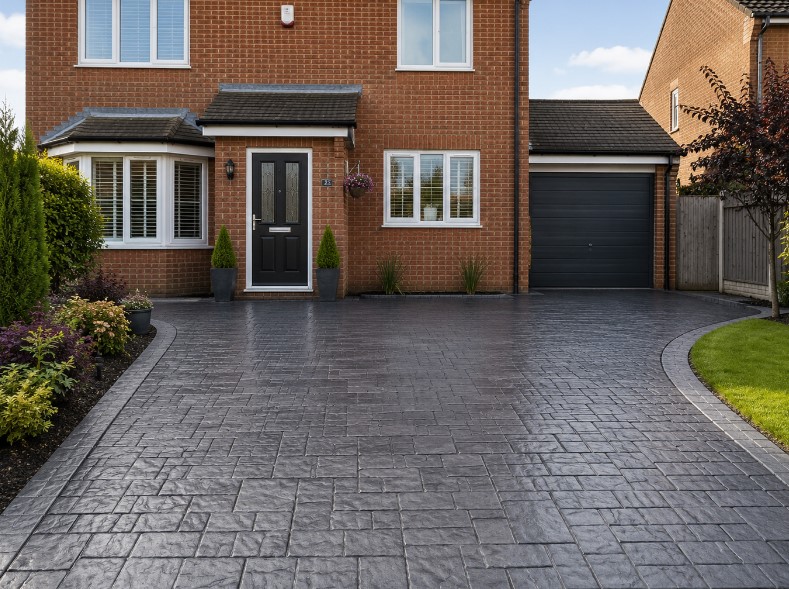
Good imprinted concrete driveway maintenance is mostly about protecting the sealant that gives the surface its colour, sheen, and stain resistance. Let the sealant deteriorate and the whole surface becomes harder to clean and more vulnerable to damage.
Cleaning imprinted concrete without stripping protection
Sweep first, then wash with a pH-neutral cleaner and a soft brush or gentle pressure wash. Avoid overly aggressive jet washing — high-pressure at close range can strip sealant over time, particularly on older applications.
Sealing imprinted concrete: what it does and when to re-seal
The sealant is doing a lot of work: enhancing the colour, protecting against staining, and making cleaning straightforward. Signs yours needs attention include:
Dull or patchy appearance where it used to look glossy
Colour that's faded noticeably (UV exposure is the main cause)
Water soaking in rather than beading on the surface
Staining that's harder to shift than it used to be
How often you'll need to re-seal depends on traffic, sun exposure, and how well the previous application was done — generally every 3–5 years is a sensible working range. If you're not sure, we're happy to take a look and give you an honest assessment rather than guess.
Preventing slippery patches
Shaded areas of imprinted concrete can develop algae quickly, especially through autumn and winter. A regular light clean and algae treatment keeps this in check. When resealing, anti-slip additives can be mixed into the sealant — worth considering for north-facing areas or any section that stays damp.
Cracks and repairs: what's normal and what's not
Hairline cracks can appear over time, especially if the driveway isn't resealed regularly. These can usually be repaired using a concrete repair compound with a matching colour tint, then resealed. If you're seeing larger cracks, spreading fractures, or any sinking, that suggests a base or ground issue rather than a surface one — and it's worth getting it checked before it worsens.
A simple yearly driveway care checklist
Monthly: Sweep; rinse as needed; check edges and drain channels are clear to limit debris accumulation
Quarterly: Deeper clean; treat any algae or moss growth; check for staining
Annually: Inspect sealant condition (imprinted concrete); assess drainage performance; check edging for movement or gaps; inspect for loose aggregates or stones, cracks, and early wear to spot structural damage and help avoid costly repairs
Mistakes we see all the time
A quick list from two decades on the tools — offered with no judgement:
Blasting it with the jet wash on full power because it worked on the patio. Imprinted concrete can take it; resin is more sensitive. Distance and pressure settings matter.
Leaving autumn leaves for weeks. They stain both surfaces and turn into a slip hazard.
Using whatever chemical was under the sink. Petrol and solvent-based products will damage resin; acid cleaners strip imprinted concrete sealant. Always check compatibility first to avoid surface damage.
Dragging hard objects or leaving heavy objects with sharp metal edges on the drive. It takes careful consideration, as resin should be protected from heavy loads and impacts that can mark or crack it.
Turning the steering wheel while the car is stationary. Dry steering can leave tyre marks and put extra stress on the resin surface.
Using car jacks directly on the drive. If they must be used, place wooden planks underneath to spread the load.
Ignoring small issues until they're expensive ones. A crack treated early costs far less than one that's been let run.
When to call in the pros
Some things are genuinely straightforward DIY. Others are worth a professional eye — especially if you're noticing something that doesn't look right rather than just routine upkeep. We can help with:
Repair work on damaged edges, cracked concrete, or worn resin areas
Assessment of sealant condition and re-sealing advice for imprinted concrete driveways
Maintenance advice for resin driveways that aren't looking as smart as they should
Full replacement if a surface is genuinely past saving — we install across Colchester and the wider Essex area, and all work comes with a 2-year guarantee (5 years for resin bound stone)
If something's bothering you about your driveway — or you just want a second opinion before spending money on it — get in touch. We'll give you straight advice, not a hard sell.
Frequently asked questions
What's the best way to clean a resin driveway without damaging it?
Sweep off loose debris first, then rinse with water. For more thorough cleaning, use a pH-neutral detergent diluted in warm water with a stiff-bristled brush. Rinse well afterwards. Avoid acid-based cleaners, bleach used routinely, and solvent-based products — these can soften or discolour the resin binder. This kind of resin driveway maintenance is usually enough to keep a low maintenance surface in good condition, and resealing is not generally required for resin-bound driveways.
Can I use a pressure washer on resin bound stone?
Yes, but with care. Keep the pressure below 150 bar, maintain at least 200mm distance from the surface, use a wide fan nozzle, and keep the lance moving. Don't hold it static over one spot. Cold water is preferable to hot.
How do I stop algae and moss making my driveway slippery?
Treat with an algaecide or biocide suitable for your surface type, or try a baking powder and water solution for lighter patches. Regular sweeping to remove debris (which algae feeds on) and keeping drain channels clear will reduce how often it comes back. For imprinted concrete, anti-slip additives can be incorporated when resealing.
What should I do if my imprinted concrete is fading or going dull?
Fading is usually a sign that the sealant is wearing off and UV exposure is bleaching the colour beneath. The fix is a clean, followed by a fresh coat of sealant — with colour tints mixed in if the fading is significant. This is best done professionally to get a consistent result.
How often does imprinted concrete need resealing in the UK?
As a general guide, every 3–5 years — though this depends on traffic levels, how much direct sun the area gets, and the quality of the previous application. Signs it's due: water soaks in rather than beads, colour looks flat, or surface staining is harder to shift than it used to be.
Will weeds grow through a resin driveway?
A well-installed resin driveway is highly resistant to weed growth through the surface itself. If weeds appear, they're almost always coming from borders, nearby soil, or gaps at the edges. Keeping margins tidy and edges sealed deals with the vast majority of cases.
What's the safest way to remove oil stains from a driveway?
Act quickly. Absorb the excess with cat litter, dry sand, or sawdust, then treat with a driveway-specific degreaser. On resin, avoid solvent-based products — petrol and white spirit can damage the resin binder. On imprinted concrete, treat before the oil penetrates the sealant for best results.
When should I get cracks in imprinted concrete checked?
Small hairline cracks are common and often just a sign that resealing is overdue — these can be repaired and resealed. If you're seeing cracks that are spreading, widening, or accompanied by any sinking or unevenness, that suggests a base issue rather than a surface one. Get it checked sooner rather than later; ground problems don't improve on their own.
Get tailored advice from a local team that knows Essex driveways
If your driveway is looking tired, you're dealing with a recurring problem, or you simply want to know whether something is worth worrying about — we're here. We've been working on driveways across Colchester, Chelmsford, Braintree, Clacton, and the surrounding Essex area for over 20 years. Whether you need maintenance advice, a repair, or a full new surface, we'll give you a straight answer and a realistic plan.
Get in touch today — or give us a call to talk through what you're seeing. No obligation, no jargon.
