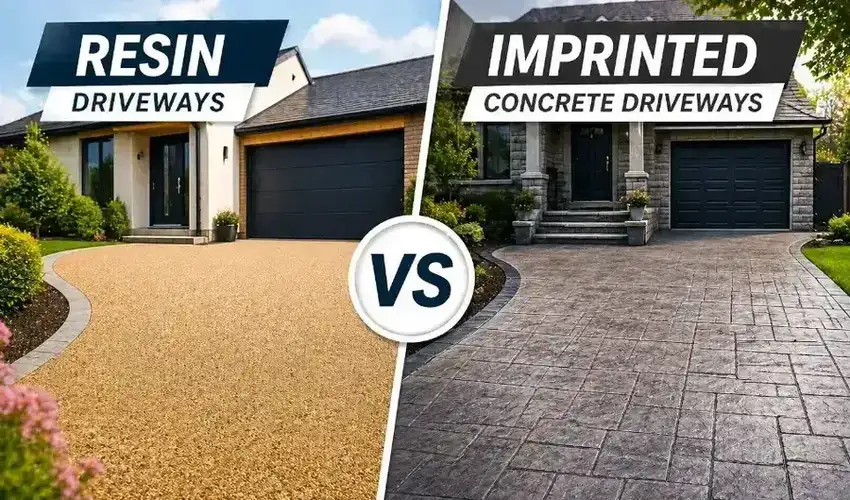

Upgrading your front garden doesn't have to start a parking war with the neighbours, but choosing the right surface can feel a bit overwhelming. If you are stuck deciding between a resin driveway vs imprinted concrete, you are certainly not alone. Both options offer a massive step up from a tired, weed-filled patch of gravel, but they do very different jobs.
Here at Creative Paving, we have spent over 22 years installing both types of driveways across Essex and Colchester. Because we install both, we aren't here to play favourites. We just want to share what actually works in the real world.
In this guide, we will walk you through everything you need to know about durability, costs, maintenance, drainage, and style, helping you figure out exactly which material suits your home and budget best. If budget is your starting point, our breakdown of resin driveway costs in Essex is a good companion read.
The quick answer (for people who've got the kettle on)
Short on time? Here is the cheat sheet to help you make a quick decision before your tea gets cold.
Choose resin bound if…
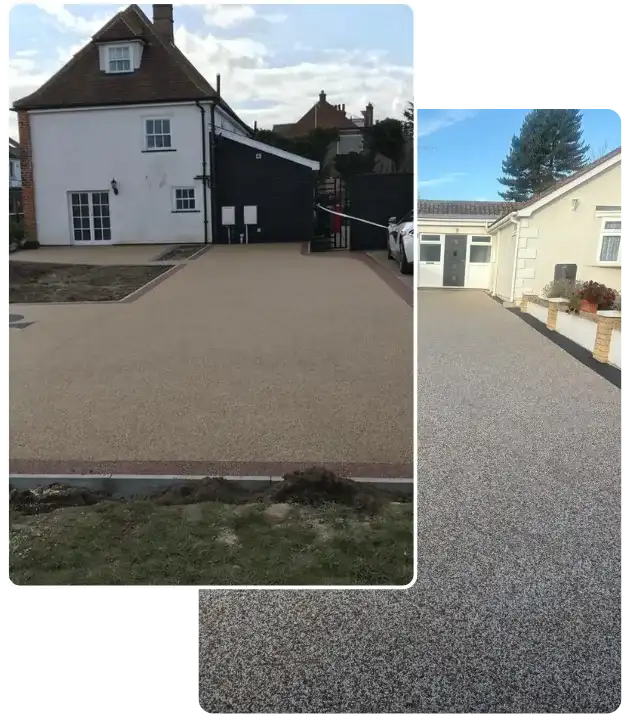
You want a modern, sleek finish with plenty of colour choices. Resin bound stone is highly porous, meaning it offers fantastic drainage, and it requires very little day-to-day maintenance to keep it looking sharp.
Choose imprinted concrete if…
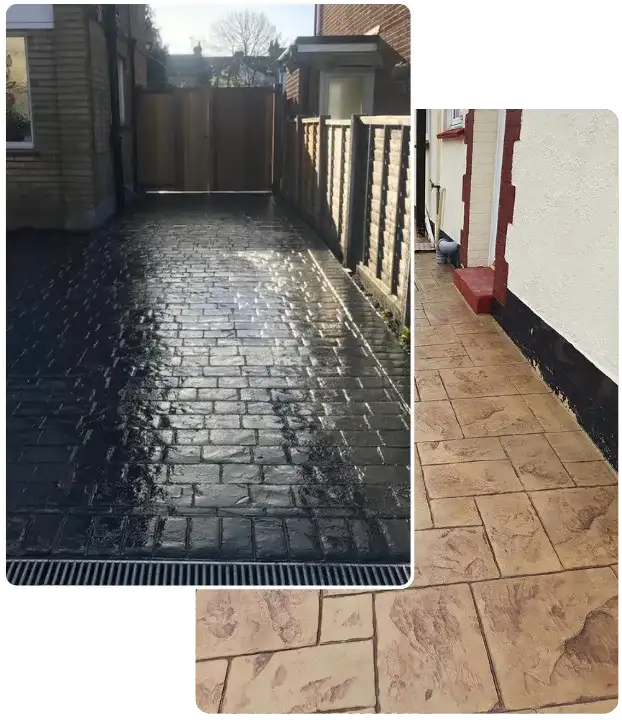
You love the traditional paving look but want it in one solid, continuous surface. It is brilliant for covering large areas quickly, provided you are happy to keep up with occasional resealing to prevent cracks and fading.
If you know your budget and what your driveway has to deal with (like steep slopes or heavy vans), talk to us. We will point you in the right direction without any hard sell.
What is a resin bound driveway (and why it's not resin bonded)
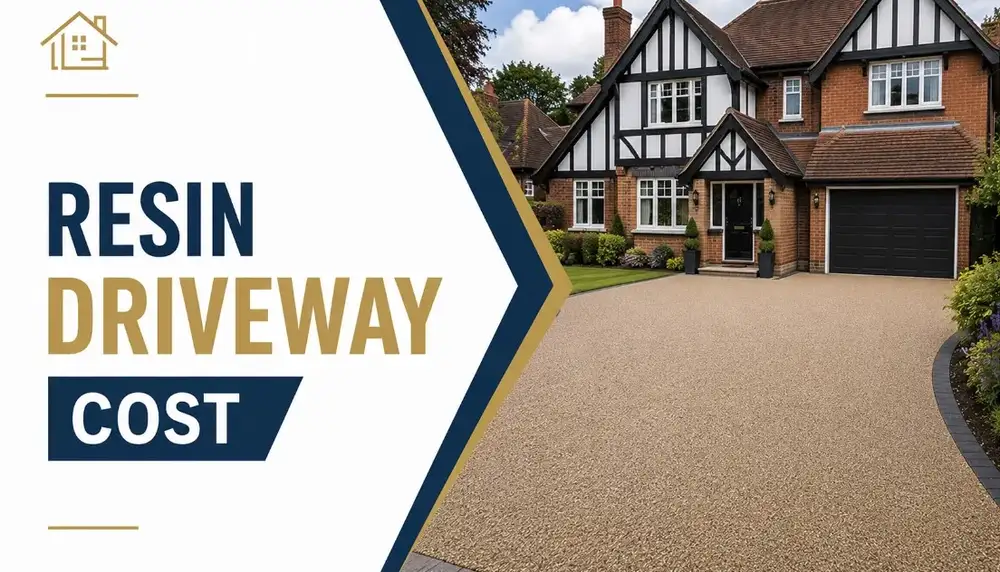
A resin bound driveway is made by mixing natural aggregate (small stones) with a clear, UV-stable resin. This mixture is trowelled onto a prepared base to create a perfectly smooth, flat surface.
It is incredibly important to note the difference between resin bound and resin bonded. Resin bonded surfaces involve scattering loose stone over a layer of resin, which leaves a rough texture and loose gravel that can easily kick up. Resin bound stone, which we highly recommend, keeps everything locked in tight. It has become incredibly popular for tidying up kerb appeal on paths, patios, and driveways alike.
What is an imprinted concrete driveway
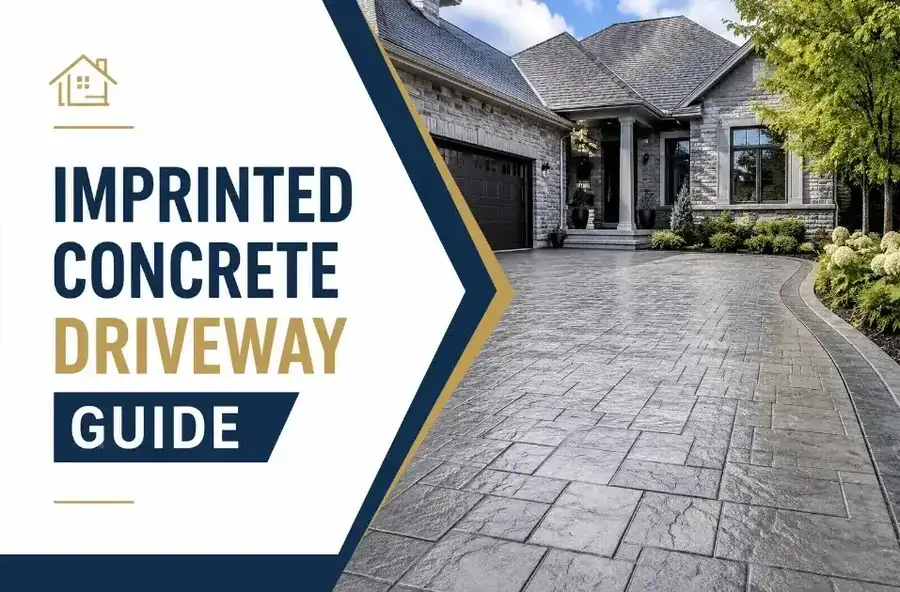
Pattern imprinted concrete is exactly what it sounds like. We pour a layer of wet concrete over a solid sub-base, add your chosen colour, and then press textured mats into the surface before it dries.
This creates an "all-in-one slab with style". You can mimic the look of traditional cobbles, slate, or brick without dealing with the annoying joints that constantly sprout weeds.
Durability and lifespan: what survives the UK weather?
Both surfaces are built to last, but they handle the wonderful British weather in slightly different ways.
Resin bound durability
Resin bound stone is naturally quite flexible. When installed correctly over a solid base, this slight flex allows it to handle minor ground movement and temperature changes without snapping. Using a high-quality UV-stable resin also means the colour won't fade dramatically in the sun. Plus, with no real joints, weeds struggle to find a place to grow.
Imprinted concrete durability
Concrete is incredibly strong, making it a great choice for heavy loads. However, its rigid nature means cracking is the primary risk. This usually happens if the ground moves, the base was poorly prepared, or extreme freeze-thaw cycles take their toll. A good quality sealant protects the colour and helps stop oil or dirt from staining the surface.
The unglamorous truth: sub-base is everything
Neither of these driveways will survive if the ground underneath them is poorly prepared. A proper sub-base distributes the weight of your vehicles and stops the top surface from sinking. Bad prep will ruin a driveway quicker than a British summer disappears, which is why professional groundwork is absolutely non-negotiable. Our walkthrough of the full driveway installation process shows exactly what proper preparation involves.
Maintenance and cleaning: your weekend reality
You probably have better things to do on a Sunday than scrub your driveway. Here is what you are actually signing up for.
Resin bound maintenance
Resin is incredibly low maintenance. A stiff broom and the occasional gentle jet wash are usually all it takes to keep it looking brand new. If your driveway is heavily shaded, you might get a bit of algae, but a light wash easily clears it.
Imprinted concrete maintenance
Concrete needs a bit more love. Alongside regular sweeping and washing, you need to keep an eye on the sealant. Resealing every few years is vital to protect the colour and stop water penetrating the surface, which can cause frost damage. Also, be careful with harsh de-icing salts in the winter, as they can eat away at the finish.
We are always happy to explain the maintenance requirements before you commit. It is much better to know the reality before you go out and buy a massive pressure washer.
Drainage and SuDS: coping with a proper downpour
UK regulations (SuDS) state that new driveways must handle rainwater responsibly to prevent street flooding.
Resin bound and permeability
Resin bound driveways are naturally porous. When laid over a porous sub-base, rainwater drains straight through the surface and back into the ground. This means no puddles, no running water, and usually no need for planning permission regarding drainage.
Imprinted concrete and drainage design
Imprinted concrete is completely solid and non-permeable. Rainwater will simply sit on top or run off the edges. To stay compliant, your installer has to design proper falls and install drainage channels or soakaways to manage the water safely.
Cost: resin driveway vs imprinted concrete
Pricing a driveway is never a one-size-fits-all situation, but we can look at the main things that drive the cost up or down.
Typical cost drivers
For resin, the price heavily depends on the size of the area, the type of aggregate you choose, and what condition your current base is in. If we have to dig out a massive area, the price goes up. For imprinted concrete, the depth of the pour, the complexity of the patterns, and the number of colours used will dictate the final bill.
When looking at a driveway material comparison UK homeowners often focus on the cheapest initial quote. We advise looking at the total cost of ownership. Concrete might require more money spent on resealing over the years, while a poorly laid cheap resin drive will cost a fortune to rip up and replace.
Style and kerb appeal: looks that last
Resin bound style options
Resin offers a highly contemporary finish. You can blend different coloured stones to match your brickwork perfectly. It looks incredibly smart when paired with contrasting block paving edges or neat brick steps.
Imprinted concrete style options
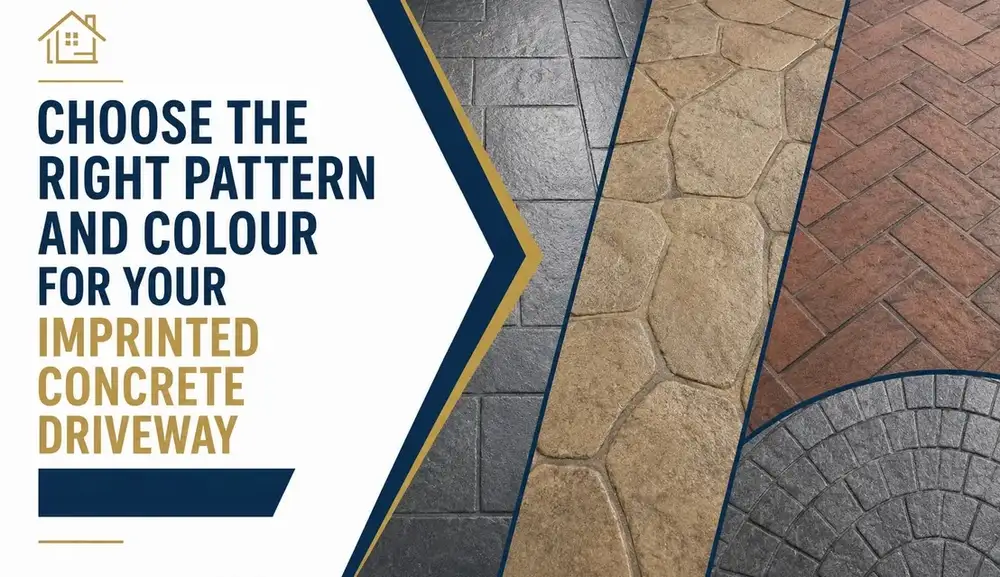
Concrete is brilliant if you love a traditional look but hate weeding. The colour release and antiquing processes give the concrete real character, mimicking natural stone beautifully. For design inspiration, see our guide to choosing imprinted concrete patterns and colours.
Head-to-head driveway material comparison UK
Here is a quick look at how they stack up against each other:
- Upfront cost: Resin bound is generally moderate to high; imprinted concrete is often moderate.
- Weed resistance: Both are excellent, as neither has open sand joints.
- Drainage: Resin bound is naturally permeable; concrete requires built-in drainage channels.
- Maintenance effort: Resin requires basic washing; concrete requires periodic resealing.
- Style range: Resin offers modern aggregate blends; concrete offers traditional paving patterns.
- Installation time: Resin is typically slightly faster as it cures quickly, though both depend on the weather.
Frequently asked questions
Which is cheaper: resin bound or imprinted concrete?
It depends entirely on your existing base. If you have a solid concrete base already in place, resin can sometimes be laid over it, making it cheaper. If full excavation is needed, prices are often quite comparable.
Does a resin bound driveway crack?
If it is installed correctly over a stable, properly prepared sub-base, cracking is extremely rare. The material has a slight natural flex.
How often does imprinted concrete need resealing?
We generally recommend having your imprinted concrete driveway resealed every 3 to 5 years to keep the colour vibrant and protect the surface from frost and oil.
Can you repair patches without it looking obvious?
Resin can be patched, but matching the exact colour of weathered stone is tricky. Imprinted concrete is harder to patch invisibly because the pattern and colour blend must be perfectly matched.
Do you offer a guarantee and a free quote in Essex?
Yes! All of our work is fully guaranteed, including our resin bound stone installations. We also provide free, no-obligation quotes across Essex and Colchester.
Ready to upgrade your driveway?
Choosing between a resin bound and imprinted concrete driveway ultimately comes down to what you want from your home. If you want fantastic drainage and a sleek, low-maintenance finish, resin is a brilliant choice. If you prefer the look of traditional paving without the hassle of weeds, imprinted concrete might be the winner.
As a family-run business with over two decades of experience, we pride ourselves on giving honest, expert advice. We handle everything from the design and drainage to the groundwork and tidy site management.
Get in touch with us today for a free, no-obligation quote. Send us a message through our contact page or give us a call to chat about your ideas. Let's get you a driveway you will actually enjoy coming home to.